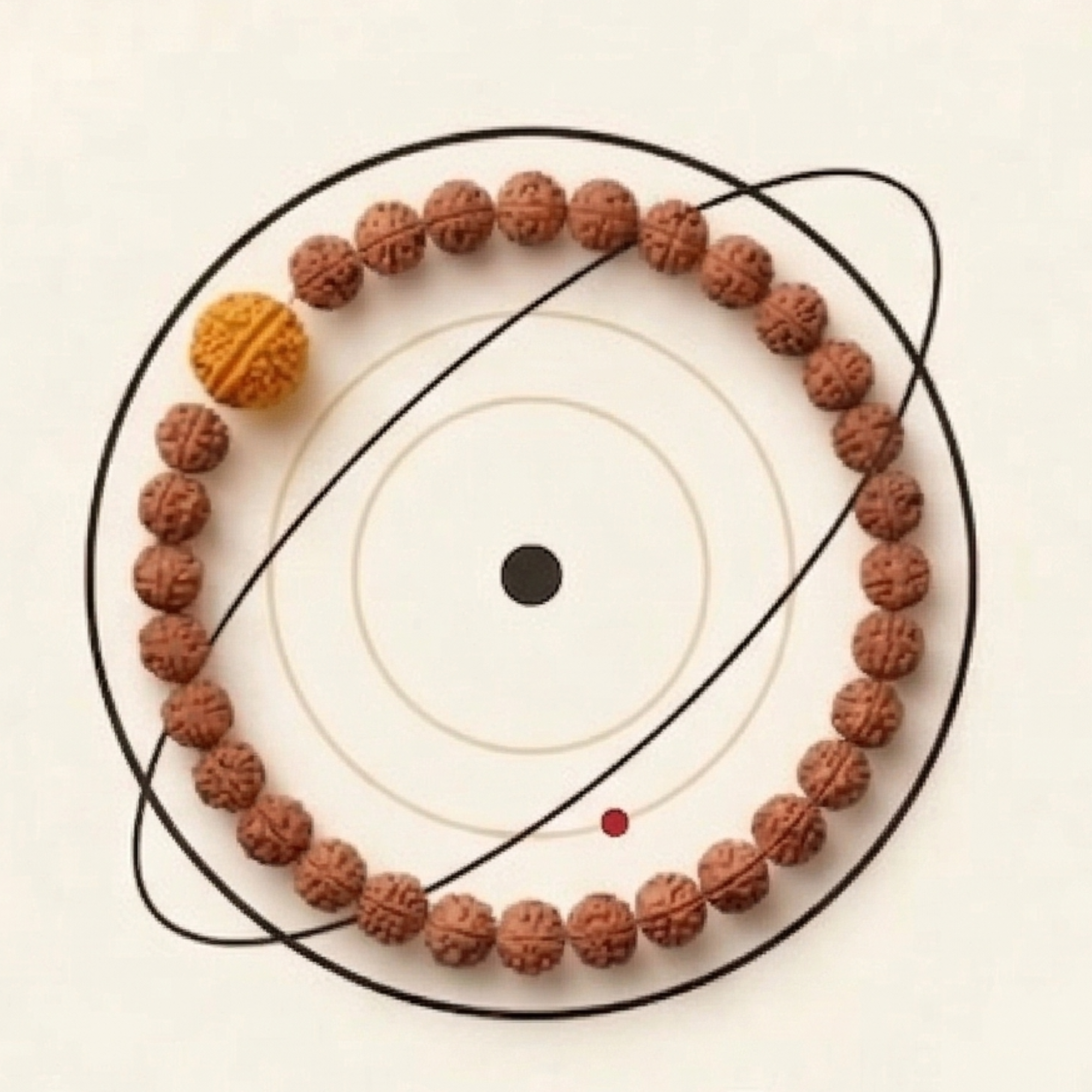

TL;DR: A traditional mala is the better choice when you have a fixed morning sadhana, a clean altar, and an uninterrupted block of time. A digital jap counter is the better choice when chanting has to fit around work, travel, or a long sankalpa that spans weeks. Most serious practitioners end up with both. The mala handles the formal morning round at the altar, and the app handles everything that happens after you leave the house.
No install needed: try the free AstroJap online jap counter right in your browser — a 108-bead digital mala that saves your count and streak — or start with the quick online jap counter demo.
Quick answer: which is right for you?
Pick a traditional 108-bead mala if you have a fixed sadhana time, a clean altar space, and you complete your jap in one uninterrupted sitting. Pick a digital jap counter if your chanting happens across the day, you travel often, or you are working toward a long-term count (1.25 lakh and above) that needs reliable cross-session tracking.
Side-by-side comparison
| Factor | Traditional Mala | Digital Counter |
|---|---|---|
| Count accuracy | Depends on focus; easy to lose place | Exact; auto-saves every tap |
| Portability | Needs a clean bag; impractical at desk | Always in your pocket |
| Ritual purity | High when consecrated and stored properly | Neutral; depends on user's bhava |
| Tactile focus | Strong; bead-thumb contact anchors attention | Lower; tap or voice input |
| Cross-day tracking | Manual; needs a paper log | Automatic; full history visible |
| Cost | ₹200 to ₹15,000 depending on beads | Free to ₹500/year for premium apps |
| Distraction risk | Very low | Notifications can interrupt; use focus mode |
Where a traditional mala is better
A physical mala has the edge in five specific settings:
- Pre-dawn brahma muhurta sadhana when the screen light disturbs the eyes
- Formal anushthan or purascharana prescribed by a guru or temple priest
- Long Gayatri or beej mantra rounds where the rudraksha or sphatik beads absorb vibrational charge over months of use
- Power-cut or low-battery situations in rural or pilgrimage contexts
- Children learning jap for the first time; the physical feedback is easier to grasp than a screen
Where a digital counter is better
A digital jap counter outperforms a physical mala in these cases:
- Office breaks and commutes when a mala draws unwanted attention
- Tracking lakh-jap sankalpa where running totals across weeks must be exact
- Multi-mantra practices like the Navagraha schedule, where keeping a separate count per planet is unwieldy on physical beads
- Building consistency through streak tracking and reminders
- Personalised jap plans generated from your Kundali, which an app can compute but a mala cannot
How to use both together
The most common arrangement among regular sadhaks looks like this:
- One or two morning rounds on a consecrated rudraksha or tulsi mala at the altar
- Additional rounds during the day counted on a jap counter app
- Both counts combined into the same sankalpa total inside the app
- Weekly review of the dashboard to check pace against the target
AstroJap supports this hybrid pattern directly. You can log mala rounds manually and the app adds them to the digital count toward your Shani sankalpa, Gayatri sankalpa, or any custom target.
What the shastras actually require
The Mantra Mahodadhi (16th century, by Mahidhara) lists six valid counting methods: rudraksha mala, tulsi mala, sphatik mala, putrajivak mala, karamala (finger-joint count), and granthi mala (knotted thread). The text does not exclude other methods; it lists the materials common in that period.
The principle the texts return to is sankhya rakshanam, the preservation of an accurate count. Any method that does that faithfully is acceptable in practice. A digital counter, used with proper sankalpa and pronunciation, satisfies this requirement. The medium changes; the discipline does not.
Frequently Asked Questions
Is digital jap less powerful than mala jap?
No classical text grades japa by the material used to count. The phala (fruit) of japa depends on sankalpa, pronunciation, focus, and completeness of the count. A distracted mala jap produces less benefit than a focused digital jap.
Which is better for Sade Sati or Mahadasha remedies?
For prescribed remedies like Shani Sade Sati, most jyotishis recommend a consecrated rudraksha or specific gemstone mala for the morning anushthan, with a digital counter used for additional rounds during the day. Either method satisfies the sankhya requirement.
Can I switch between mala and digital mid-sankalpa?
Yes, as long as you keep one continuous count. AstroJap lets you log mala rounds manually and combine them with app-counted rounds toward the same sankalpa target.
Do digital counters work for group chanting (satsang)?
Group chanting traditionally uses a shared rhythm rather than individual counting. A digital counter is best for solo jap. Some sangha apps offer group sessions where each participant counts privately on their device.