TL;DR: Raksha Bandhan falls on Friday, 28 August 2026. The Shubh Muhurat to tie rakhi is 5:57 AM to 9:48 AM IST, with no Bhadra Kaal to avoid this year. A partial lunar eclipse (chandra grahan) does occur the same day, but it is not visible in India, so no Sutak applies — the muhurat stands exactly as calculated. This guide gives the date, the exact timing, the eclipse clarification, the tying ritual, and the mantra to recite.
Raksha Bandhan 2026 — quick answer
Date: Friday, 28 August 2026 (Shravan Purnima).
Shubh Muhurat: 5:57 AM – 9:48 AM IST.
Bhadra Kaal: None during the muhurat — a clear year.
Chandra Grahan: Yes, same day, but not visible in India — no effect on the ritual.
Count your 108 right here
Tap once per repetition. Nothing to install.
Your mantra
0
0 / 108
Malas: 0 · Total japs: 0
Picked up where you left off.
Your sankalp
Sankalp complete 🙏
At this pace:
1 mala complete 🙏
Make this a sankalp
Set a lifetime target and keep chanting toward it.
Keep your jap history, streaks, and sankalpa targets in AstroJap.
Save your streak → install AstroJapWhen is Raksha Bandhan 2026?
Raksha Bandhan is observed on the Purnima (full moon) of Shravan (Sawan) month, which in 2026 falls on Friday, 28 August. The Purnima tithi begins around 9:08 AM on 27 August and runs until roughly 9:48 AM on 28 August — this is why the shubh muhurat window closes at 9:48 AM: it is calculated to sit entirely inside the tithi. Since Raksha Bandhan is a tithi-based festival, the date is the same nationwide, whether your family follows the Purnimanta or Amanta calendar reckoning used for the Sawan month itself.
Shubh Muhurat to tie rakhi
| Window | Timing (28 Aug 2026, IST) | Notes |
|---|---|---|
| Shubh Muhurat (best) | 5:57 AM – 9:48 AM | Inside Purnima tithi, no Bhadra overlap. |
| Aparahna (fallback) | Early afternoon, before sunset | Use if the morning is not possible; avoid local Rahu Kalam. |
A morning muhurat this clean — full tithi coverage, zero Bhadra — is not guaranteed every year, so families who can manage the early window should take it. If your city's local panchang shows the tithi ending slightly earlier or later than 9:48 AM, follow your local panchang; small regional variation of a few minutes is normal.
Does the lunar eclipse affect Rakhi this year?
2026 happens to place a partial chandra grahan on the exact same day as Raksha Bandhan — 28 August, running from roughly 6:53 AM to 12:32 PM IST. This naturally worries people, since eclipses usually come with Sutak Kaal restrictions on cooking, puja and auspicious rituals. The key detail: this eclipse is not visible anywhere in India — it plays out over the Americas, Europe and parts of Africa, while it is daytime and the Moon is below the horizon for Indian observers. Vedic practice ties Sutak Kaal to local visibility, not to the eclipse occurring somewhere on Earth. Since there is no visibility in India, no Sutak Kaal applies, and the Rakhi Shubh Muhurat stands exactly as calculated above — temples remain open and all rituals proceed normally.
Is there Bhadra Kaal in 2026?
Bhadra Kaal is the inauspicious period ruled by Vishti karana that Rakhi tying traditionally avoids — the belief traces back to Ravana, who is said to have been tied a rakhi during Bhadra and met his downfall within the year. In 2026, Bhadra Kaal ends before sunrise on 28 August, so it does not overlap the daytime muhurat at all. This is one of the more straightforward recent years for timing — no need to split the day around an afternoon Bhadra window as in some previous years.
Step-by-step: how to tie rakhi correctly
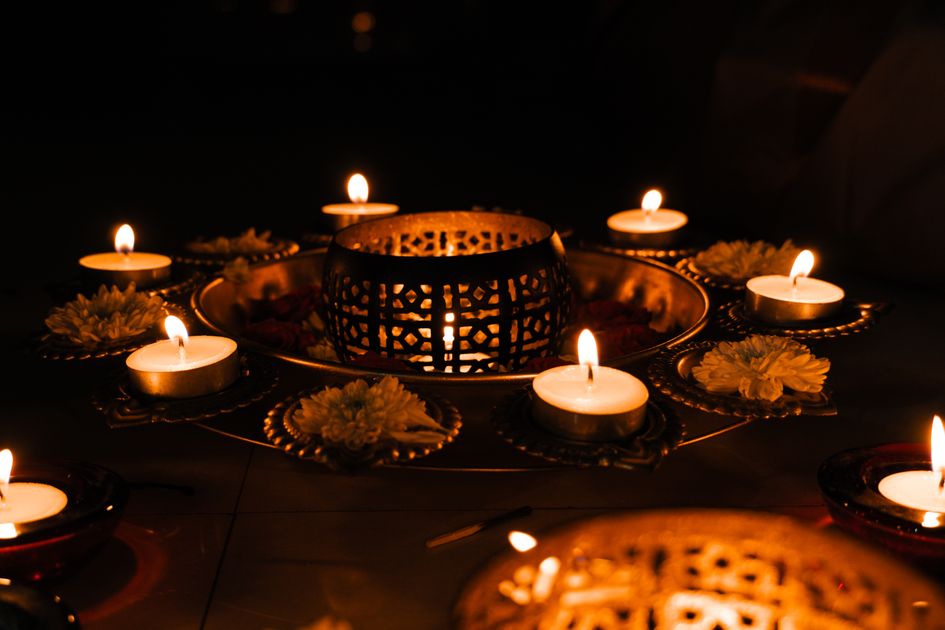
- Prepare the thali. Rakhi thread(s), roli (kumkum), unbroken rice grains (akshat), a diya, and sweets.
- Seat your brother facing east or north if possible — considered the most auspicious directions for the ritual.
- Apply tilak on the forehead with roli, then press a few grains of akshat onto it.
- Perform aarti with the lit diya, circling it in front of your brother.
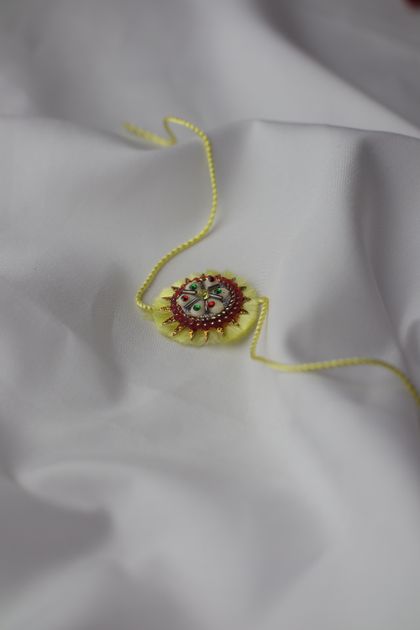
- Tie the rakhi on the right wrist while reciting the traditional mantra (below).
- Offer sweets to complete the ritual — the brother traditionally responds with a gift and a spoken promise of protection.
Mantra to recite while tying rakhi
येन बद्धो बली राजा, दानवेन्द्रो महाबलः। तेन त्वामपि बध्नामि, रक्षे मा चल मा चल॥
Yena Baddho Balee Raja, Daanavendro Mahaabalah, Tena Tvaam-api Badhnaami, Rakshe Maa Chala Maa Chala
Meaning: "As I bind you with this thread that once bound the mighty king Bali, may this bond keep you protected and never waver." It is recited by the sister while tying the rakhi, invoking the same protective power for her brother.
Some families follow this shloka with a short jap of a protective mantra for the family's ishta devata — Gayatri, Om Namah Shivaya or Om Namo Bhagavate Vasudevaya are common choices. If your family keeps a daily mantra practice, Raksha Bandhan is also a natural day to start a shared sankalpa with siblings. See the what is mantra jap guide if you are new to the practice.
What if you miss the morning muhurat?
Work schedules, travel and family logistics mean not everyone can tie rakhi between 5:57 and 9:48 AM. The accepted fallback is the Aparahna (early afternoon) period, avoiding your local Rahu Kalam window — check a city-specific panchang for the exact Rahu Kalam time where you live, since it varies. Tying rakhi at night is discouraged by most panchangs; if you genuinely cannot manage any time before sunset on 28 August, tradition holds that the sankalpa and sibling bond matter more than the exact minute — complete the ritual as soon as reasonably possible.
Start a shared sankalpa this Raksha Bandhan
AstroJap helps siblings track a daily mantra practice together
Whether it's a protective mantra for your brother or a shared 108-jap sankalpa, AstroJap's digital mala counter tracks your streak daily and recommends the right mantra for your own Kundli — a meaningful Raksha Bandhan gift beyond the thread itself.
Install AstroJap free →Frequently asked questions
When can I tie rakhi to my brother in 2026?
Raksha Bandhan 2026 falls on Friday, 28 August 2026 — the Purnima (full moon) of Shravan month. You can tie rakhi any time during Purnima tithi that day, but the Shubh Muhurat for the best results is 5:57 AM to 9:48 AM IST. If your family cannot manage the morning, the afternoon Aparahna window is the accepted fallback.
What is the correct shubh muhurat time to tie rakhi in 2026?
The Rakhi Shubh Muhurat on 28 August 2026 is 5:57 AM to 9:48 AM IST, which is also when Purnima tithi is active before it gives way to Pratipada. This is a good year for the ritual — 2026 has no Bhadra Kaal overlapping the muhurat, so the entire morning window is auspicious with no time to avoid.
Is there a grahan (eclipse) on Raksha Bandhan 2026?
Yes — a partial chandra grahan (lunar eclipse) occurs on 28 August 2026, the same day as Raksha Bandhan, running roughly from 6:53 AM to 12:32 PM IST. However, it is not visible from India (it falls during Indian daytime, below the horizon for us). Sutak Kaal restrictions apply only where an eclipse is locally visible, so no Sutak applies in India this year — you can celebrate Raksha Bandhan and tie rakhi exactly as normal.
Is there Bhadra Kaal on Raksha Bandhan 2026, and does it affect the muhurat?
No. Bhadra Kaal — the period traditionally avoided for tying rakhi — is not overlapping the Rakhi muhurat in 2026. Bhadra ends before sunrise on 28 August, so the full 5:57 AM–9:48 AM window is clear. This is unusual; in many recent years Bhadra has forced families to wait until afternoon, so 2026 is a comparatively simple year for timing.
What if I miss the morning muhurat — can I tie rakhi later in the day?
Yes. If the 5:57–9:48 AM window is missed, the Aparahna (early afternoon) period is the next best option — most panchangs treat any time before sunset on 28 August as acceptable for family convenience, since the day itself remains sacred to the festival. Avoid your local Rahu Kalam window if possible; check a city-specific panchang for the exact Rahu Kalam timing where you live. Tying rakhi after sunset is discouraged by tradition, so aim to complete it during daylight hours.
What mantra should be recited while tying rakhi?
The traditional shloka recited while tying rakhi is: "Yena baddho balee raja, daanavendro mahaabalah, tena tvaam api badhnaami, raksha maachala maachala" — meaning "As I bind you with this thread that once bound the mighty king Bali (protecting him from harm), may this bond keep you protected and steady." Sisters recite it while tying the thread; brothers may repeat it silently as a vow of protection in return.
Can rakhi be tied over video call if siblings are far apart?
Yes — plenty of families exchange rakhi by courier before 28 August and complete the tying ritual over a video call during the shubh muhurat itself, reciting the mantra together in real time. The tithi and muhurat govern the moment of the ritual, not physical proximity; the sankalpa and intention matter more than the format.