
Mantra jap (also spelled mantra jaap) is the cornerstone of Vedic spiritual practice. Translated simply, it is the rhythmic repetition of a sacred sound — but in practice it is a complete technology of mind, breath and consciousness. This guide explains what mantra jap is, the three classical types, its benefits, and how to start.
Count your 108 right here
Tap once per repetition. Nothing to install.
Your mantra
0
0 / 108
Malas: 0 · Total japs: 0
Picked up where you left off.
Your sankalp
Sankalp complete 🙏
At this pace:
1 mala complete 🙏
Make this a sankalp
Set a lifetime target and keep chanting toward it.
Keep your jap history, streaks, and sankalpa targets in AstroJap.
Save your streak → install AstroJapWhat is Mantra Jap?
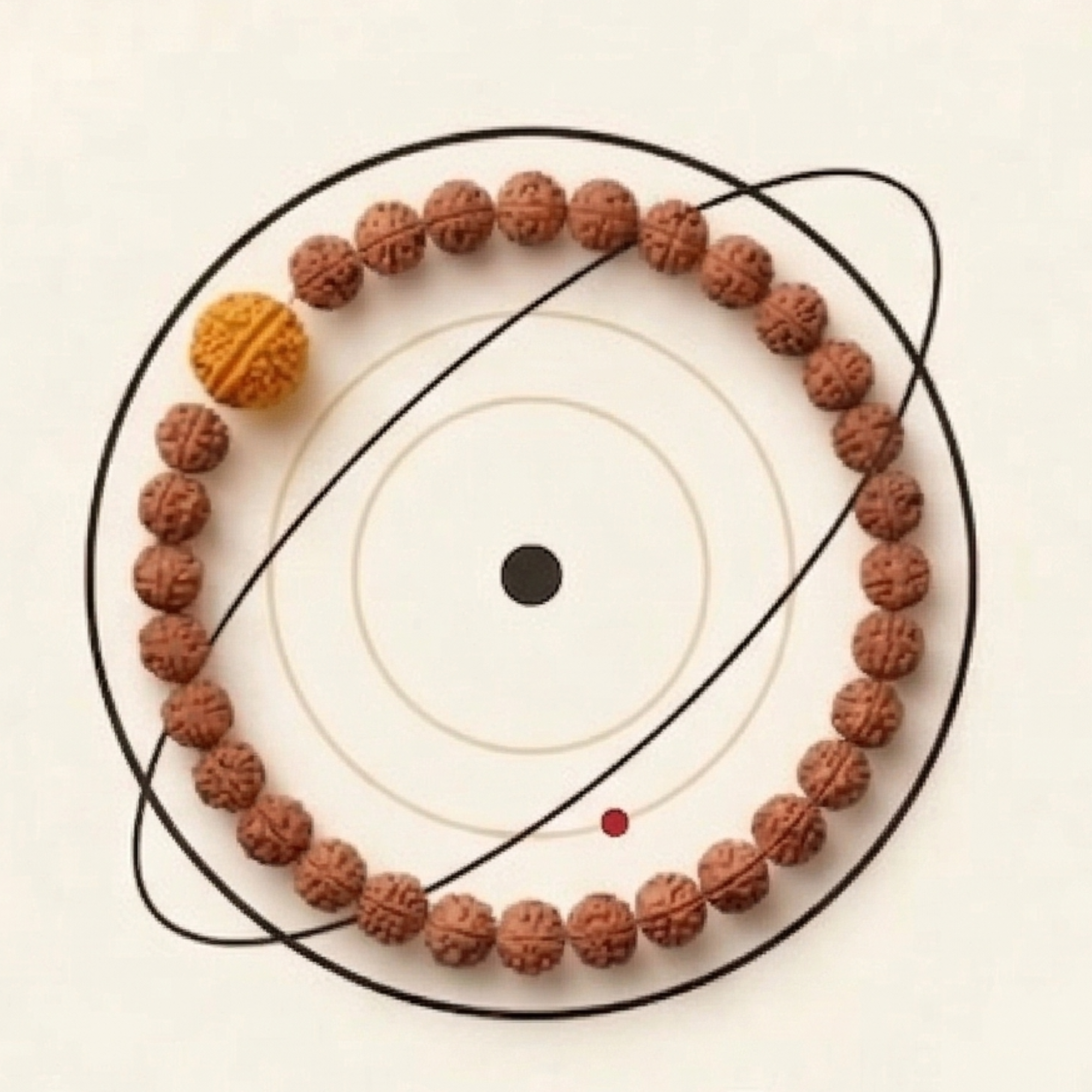
Mantra jap is the deliberate, repeated chanting of a mantra — a Sanskrit syllable, name or phrase — typically counted on a 108-bead mala. The repetition can be aloud, whispered or purely mental. Each repetition is one jap; 108 jap make one mala; 16 malas (1,728 jap) is a classical daily target for advanced sadhaks.
Origin and Meaning of "Jap"
The word jap comes from the Sanskrit root √जप् (jap) meaning "to mutter, to repeat softly." Jap is mentioned across Vedic literature — the Bhagavad Gita (10.25) declares "Yajñānāṁ japa-yajño 'smi" — "Of all sacrifices, I am the sacrifice of jap." This single line establishes jap as the highest form of spiritual offering.
The Three Types of Jap
- Vaikhari jap (वैखरी जप) — chanted aloud. Best for beginners and group sadhana.
- Upanshu jap (उपांशु जप) — whispered, with lip movement but inaudible. Considered 100× more powerful than vaikhari.
- Manasika jap (मानसिक जप) — purely mental, no lip or sound. Considered 1000× more powerful, but requires advanced focus.
Begin with vaikhari for 1–2 weeks, then transition to upanshu, and eventually to manasika. A digital jap counter is especially helpful during upanshu and manasika jap because the focus is internal — see our digital vs traditional mala guide.
Benefits of Daily Mantra Jap
- Mental clarity: Repetitive sound calms the default-mode network, reducing rumination.
- Emotional regulation: Studies show reduced cortisol and lower anxiety after 8–12 weeks of daily jap (full review in the science of mantra chanting).
- Discipline: Daily jap builds a non-negotiable spiritual anchor in your routine.
- Planetary balance: Specific mantras balance specific grahas in your Kundli — see Navagraha mantras.
- Sankalpa shakti: Repeated, focused sound is believed to imprint intention on consciousness.
How to Start Mantra Jap
- Choose your mantra (see next section).
- Pick a fixed time — early morning is best, but consistency matters more than time of day.
- Sit on a clean asana, spine upright, eyes soft or closed.
- Take 3 deep breaths to center yourself.
- Begin chanting on your mala (or online jap counter) — one mantra per bead.
- Complete at least one mala (108 jap) — do not cross the Guru bead, flip to continue.
- End with gratitude. Sit quietly for 1 minute.
For a structured start, follow our 7-day mantra practice plan.
How to Choose the Right Mantra
Choosing the right mantra is the difference between a generic practice and a transformative one. Three valid approaches:
- By inclination (bhakti): Pick a deity you feel drawn to — Krishna, Shiva, Devi, Hanuman.
- By weekday: Match mantras to days — see our day-wise mantras.
- By Kundli (jyotish): The most precise method. Identify the malefic graha in your chart and chant its remedial mantra. AstroJap automates this — enter your birth details, get the right mantra, and start jap on the in-app digital counter.
Frequently Asked Questions
What does 'mantra jap' actually mean?
Mantra jap (or jaap) means the meditative repetition of a sacred sound. The word comes from the Sanskrit root 'jap' — to mutter, to repeat softly. Jap is one of the oldest and most universal spiritual practices in Vedic tradition.
How many times should I do mantra jap?
The traditional minimum is 108 repetitions (one mala) per day. Serious sadhaks chant 1, 5, 11 or 16 malas daily. For beginners, even 27 repetitions consistently is more powerful than 108 done occasionally.
Is mantra jap a religious practice or can anyone do it?
Anyone can do mantra jap regardless of religious background. The practice is rooted in Vedic spirituality but its benefits — focus, calmness, emotional regulation — are universal. Modern research on mantra meditation supports this.
What are the three types of mantra jap?
Classical texts describe three types. Vaikhari jap: chanting aloud, audible to others — the beginner's method. Upanshu jap: whispered, lips moving but inaudible — 10 times stronger phala than Vaikhari. Manasik jap: silent mental chanting — 100 times stronger, but the hardest because the mind tends to wander.
What are the benefits of daily mantra jap?
Documented benefits: lower cortisol and stress markers within 2-3 weeks, improved focus and verbal memory, better sleep quality, reduced anxiety, and the spiritual benefits described in classical texts (purification of karma, increased viveka, devotional development). Effects compound with daily consistency over months.
How is mantra jap different from meditation?
Meditation is the broader category; mantra jap is one specific technique within it. Meditation can be silent breath observation (Vipassana), open awareness (Zen), or visualization. Mantra jap specifically uses a repeated sacred sound as the anchor. Most traditions consider mantra jap easier for beginners because the sound gives the mind something to hold.