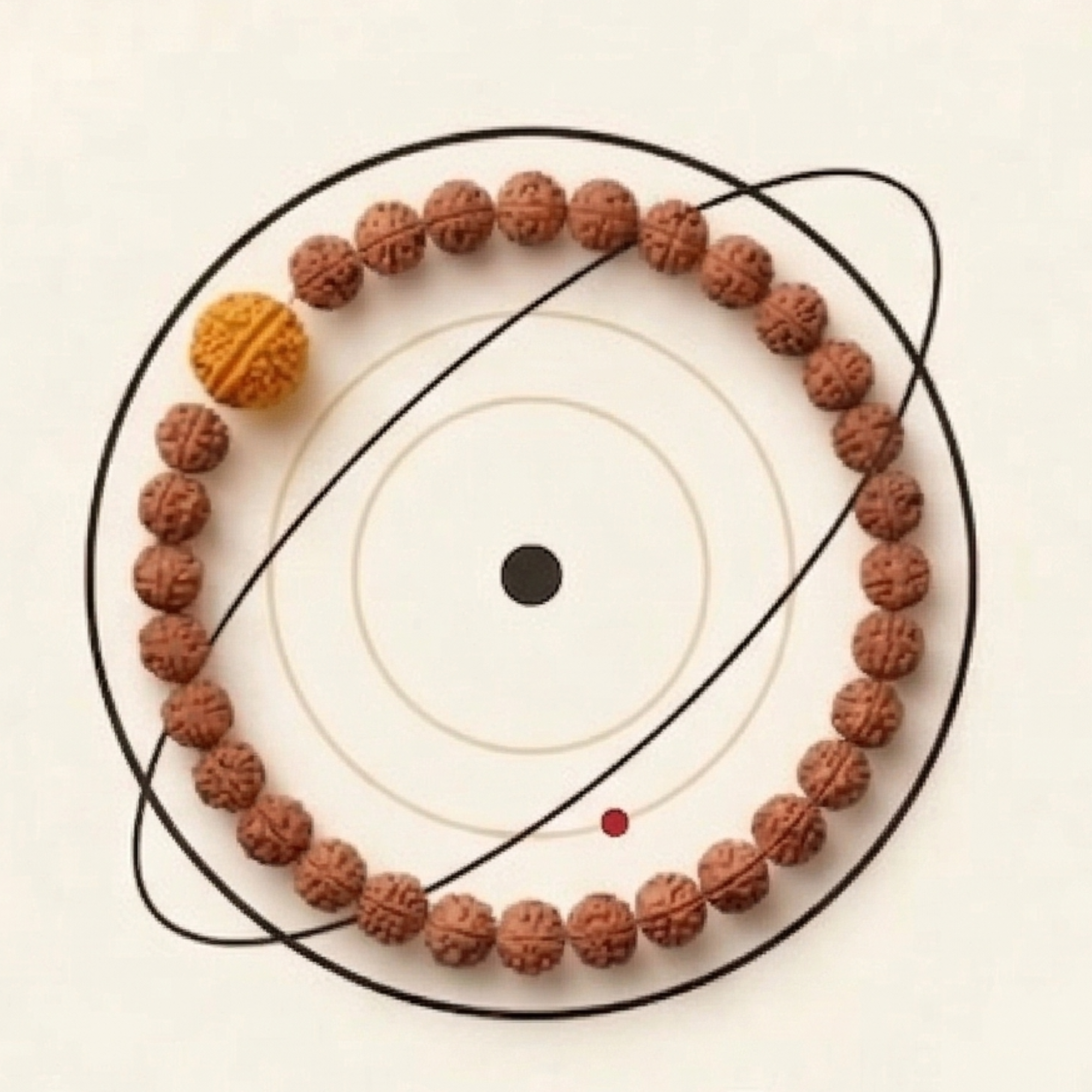

TL;DR: A digital jap counter is a mobile app or device that counts your mantra repetitions in place of a physical 108-bead mala. You tap, speak, or move a virtual bead, and the app keeps a running total, marks each completed round, and saves your daily streak. It is most useful for practitioners who want to chant during commutes, at work, or while travelling, and who want their count preserved across sessions.
Count your 108 right here
Tap once per repetition. Nothing to install.
Your mantra
0
0 / 108
Malas: 0 · Total japs: 0
Picked up where you left off.
Your sankalp
Sankalp complete 🙏
At this pace:
1 mala complete 🙏
Make this a sankalp
Set a lifetime target and keep chanting toward it.
Keep your jap history, streaks, and sankalpa targets in AstroJap.
Save your streak → install AstroJapWhat is a digital jap counter?
A digital jap counter is a software tool that records mantra repetitions during japa, the practice of repetitive mantra chanting in Hindu, Buddhist, and Sikh traditions. It replaces the physical jap mala with a touchscreen, voice input, or wearable sensor, while preserving the traditional structure of 108-bead rounds.
The category sits next to mainstream meditation apps like Insight Timer and Calm, but with a specific focus on sagun japa (counted recitation of a named deity mantra) rather than general mindfulness timers. Common examples on the Play Store and App Store include AstroJap, Mantra Counter, and Jaap Counter 108. Some practitioners also repurpose general-purpose tally counter apps, though these lack mantra context and round structure.
How does a digital jap counter work?
A digital jap counter increments a number every time you complete one mantra recitation, using one of four input methods. The app then groups every 108 increments into a round (mala) and stores the total against your chosen mantra and sankalpa.
The four common input methods:
- Tap counting. You touch a button or bead on the screen after each chant. This is the most accurate method and is used by AstroJap and most dedicated japa apps.
- Voice detection. The microphone listens for the mantra and increments automatically. Accuracy depends on pronunciation clarity and background noise.
- Bead-swipe (virtual mala). A scrollable 108-bead string on screen. You flick beads one at a time, mimicking the physical thumb-and-bead motion.
- Wearable sensor. Devices like the Om Bead or smart malas use a small accelerometer inside the Guru bead to detect bead pulls.
Types of digital jap counters
Three formats dominate the market in 2026:
- Mobile apps. Run on Android and iOS. Offer mantra libraries, transliteration, audio guidance, and progress dashboards. Most accessible category.
- Physical electronic counters. Pocket clickers and digital tasbih devices, popular in Sikh and Muslim prayer traditions and increasingly adapted for Hindu japa.
- Smart malas. Bluetooth-enabled malas that look traditional but sync each bead pull to a paired app. Marketed by brands like Mala Touch.
Who should use a digital jap counter?
A digital counter is a strong fit for the following practitioners:
- Beginners who lose count or get distracted before completing 108 repetitions
- Working professionals chanting in short windows across the day
- Anyone doing a long-form sankalpa such as 1.25 lakh (125,000) or 10 lakh (1 million) jap, where count integrity across weeks or months is essential
- Travellers and renters without a fixed altar or mala storage space
- People with arthritis or hand mobility issues who find finger-bead counting painful
A physical mala still has advantages for fixed-time morning sadhana, ritual purity in temple settings, and the tactile grounding that some practitioners find essential. The two tools coexist for most serious sadhaks.
Features to expect in a good app
A well-built japa counter app in 2026 should include:
- 108-bead rounds with automatic round-completion sound or vibration
- Mantra library with Devanagari and IAST transliteration
- Sankalpa tracking for long-term targets
- Daily streak and reminder tied to your local sunrise or chosen muhurta
- Offline mode so the count is preserved without internet
- Auto-save that restores progress if the app crashes
- Kundali integration that suggests the right mantra based on your planetary placements, available in apps like AstroJap
Are digital counters accepted in tradition?
Classical texts on japa such as the Mantra Mahodadhi and the Tantraraja Tantra emphasise three conditions for a valid count: clear sankalpa (stated intention), correct uccharana (pronunciation), and uninterrupted sankhya (count). None of these specify the material used for counting. Rudraksha mala, tulsi mala, knotted thread (granthi mala), and finger-joint counting (karamala) have all been accepted historically.
Many contemporary teachers and temple priests in India accept digital counting for daily practice, with the reasoning that a sadhak who actually completes their jap on a phone has done more spiritual work than one who skipped it because their mala was at home. What matters is that the count is real and the attention is real.
For ritual contexts like a formal purascharana (intensive deity-specific jap) or temple-prescribed remedies for a graha dosha, many priests still prefer a consecrated physical mala. For everything outside that, a digital counter is the practical choice.
Frequently Asked Questions
Is a digital jap counter the same as a tally counter?
Functionally yes, but a dedicated jap counter app adds spiritual context: 108-bead rounds, mantra libraries, daily streaks, and reminders aligned to muhurta. A plain tally counter only increments a number.
Does chanting on a phone reduce the spiritual benefit?
Most modern acharyas accept digital counting for travel, work breaks, and consistency-building. The shastric requirement is sankalpa (intention), correct pronunciation, and uninterrupted count, none of which depend on the medium of counting.
How accurate are app-based jap counters?
Tap-to-count and bead-based digital malas are 100% accurate because the user controls each increment. Voice-detection counters depend on microphone quality and ambient noise and are usually 90-95% accurate.
Can I use a digital counter for important sankalpa like 1.25 lakh jap?
Yes. A long-form sankalpa benefits from a digital counter because it logs every session, prevents losing count across days, and shows total completions. AstroJap saves your sankalpa target and tracks progress until the count is complete.
What happens if the app closes mid-jap?
A well-built jap counter saves your count locally on every tap. AstroJap restores the exact bead position even after the app is force-closed or the phone restarts.